 |
| MAX-website | feedback | subscribe | unsubscribe | full screen version | epomm website | news archive |
|
Dear reader,
|
|
They way towards the QMSMM |
|
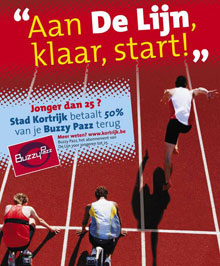 Campaign-in-Kortrijk, Belgium |
The QMSMM was inspired by existing quality management systems like ISO,
EFQM, BYPAD, Total Quality Management
(TQM), Eco-Management and Audit Scheme (EMAS), the Deeming Cycle
and CAF.
|
The Quality Management Circle |
|
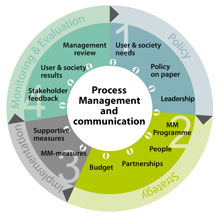 Click here to view the interactive quality circle |
The QMSMM scheme is a process that focuses on developing, monitoring, assessing and improving both the overall Mobility Management
policy and separate Mobility Management measures. It involves four steps (policy, strategy, implementation and monitoring & evaluation)
and twelve sub steps, which are structured in a quality circle: The city’s policy defines the overall vision of a city or an organisation on how it will promote sustainable transport. Within the framework of the overall Mobility Management policy a Mobility Management strategy is developed, which includes the Mobility Management programme to be implemented, along with necessary partnerships, budget issues, and internal organisation and resources. The implementation of measures with a sound implementation plan is the next step in the circle, and this can be accompanied with supportive measures. Finally, a good evaluation plan contributes to the overall quality of your Mobility Management.
|
Phasing in quality improvement - the ladder of development |
|
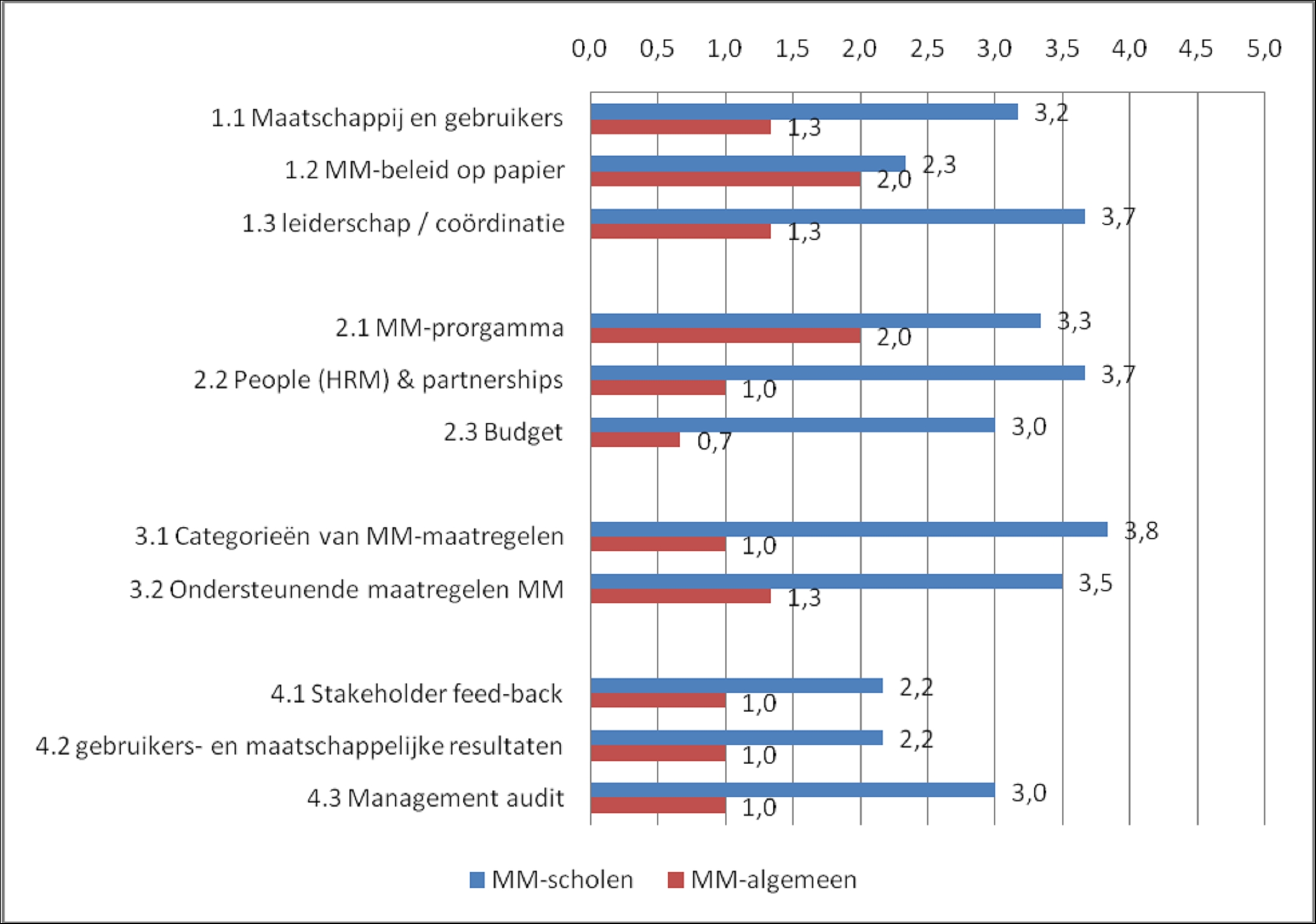 Click to enlarge |
Quality improvement leads cities through a series of development phases. Each phase has a number of typical qualities:
In order to adopt the QMSMM, a city administration or department must take an active role. They must be prepared to examine and assess their current practices regarding each criteria and then determine how changes could start or improve their Mobility Management. The analysis is done through a combination of document analysis, personal interviews and collective discussions with the Mobility Management team and with the main stakeholders. The resulting assessment forms the basis for further improvement. The MAX project developed this as an audit procedure to support the implementation of the QMSMM. It grades each element of the quality circle according to the development ladder AND provides guidance to make further improvements. In this way the city can see on what level it is, which parts need improvement, monitor progress and also compare with other cities.
|
QMSMM tools |
|
 European Committee for Standardisation |
Currently, the following tools are being finalised and will be available in September 2009 on the EPOMM website:
See also the presentations from the ECOMM 2009 on the QMSMM.
|
DELTA project: Mobility solutions for cities and regions |
|
 |
EPOMM cooperates with the DELTA project, co-funded by the 7th framework programme. It addresses the problems and needs associated with passenger transport
systems that are faced with high and steep seasonal demand. The project will define and promote intelligent mobility strategies, practices guidelines and
policies enabling the optimum management of seasonal traffic in regions with proven problems. It is planned that Delta will use and adapt some of the MAX tools developed.
If you are an affected city or region and want to benefit from the advantages like know-how and experience exchange with other regions, contact DELTA on www.delta-project.eu. You can download their latest newsletter here.
|
 |
 |
 |
 |
 |
 |
 |
| MAX-website | feedback | subscribe | unsubscribe | full screen version | epomm website | news archive |